What are the differences between in-line, at-line, and off-line gas analysis in Modified Atmosphere Packaging (MAP), and which Dansensor models are best suited for each?
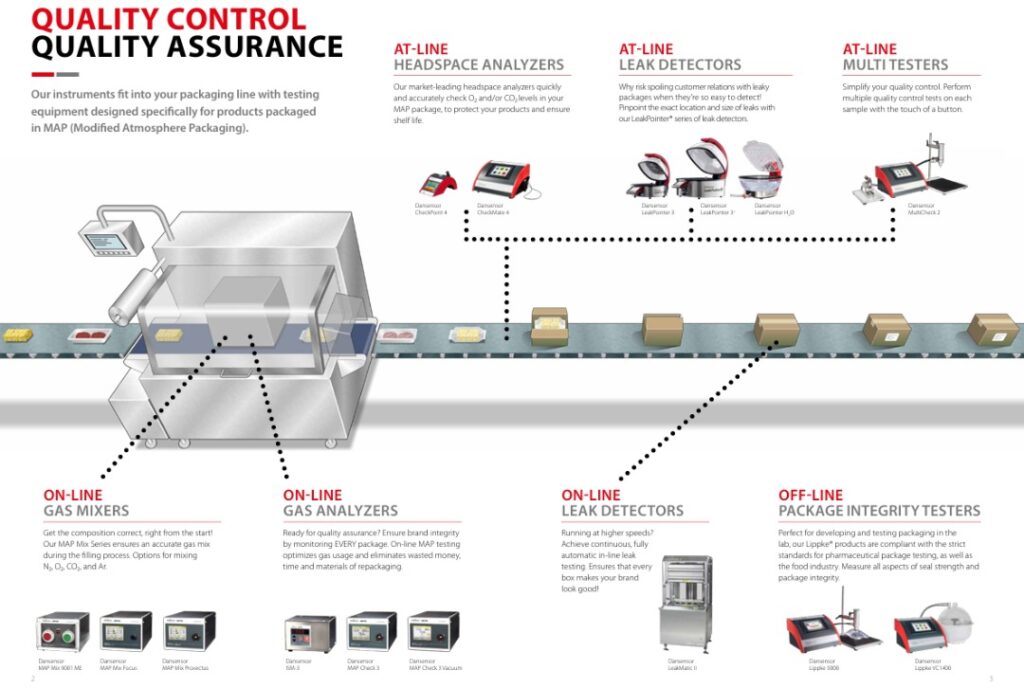
In MAP production environments, headspace gas analysis plays a critical role in ensuring the correct levels of oxygen (O₂), carbon dioxide (CO₂), and nitrogen (N₂) are present in every package. Depending on the point in the packaging workflow and the level of automation required, gas analysis is typically categorized into three types: in-line, at-line, and off-line testing.
Each method offers different advantages and use cases — and MOCON Dansensor provides a range of specialized equipment to suit all three approaches.
In-line Gas Analysis
What it means:
Real-time, automated gas analysis that occurs directly on the production line without operator intervention.
Key Benefits:
- Immediate feedback and control
- Automatic rejection of faulty packages
- Ideal for high-speed MAP lines
Recommended Model:
✅ Dansensor MAP Check 3
- Measures oxygen and optional CO₂ in real-time directly on the MAP machine
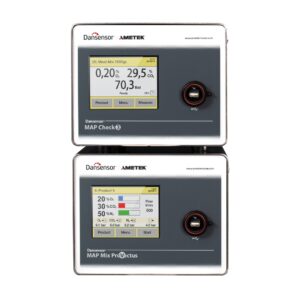
- Integrates with gas mixers (e.g. Dansensor MAP Mix Provectus) and flow wrappers or tray sealers
- Reduces gas consumption by optimizing MAP processes in real time
Use Case:
A high-volume salad tray production line using a tray sealer with N₂/CO₂ flushing requires immediate gas feedback to reduce waste and avoid under-gassed products.
At-line Gas Analysis
What it means:
Testing that occurs near the production line — not in real-time, but within close proximity for immediate batch checks or operator spot-checks.
Key Benefits:
- Fast sampling without interrupting the line
- Useful for QA batch validation
- Less costly than fully integrated in-line systems
Recommended Model:
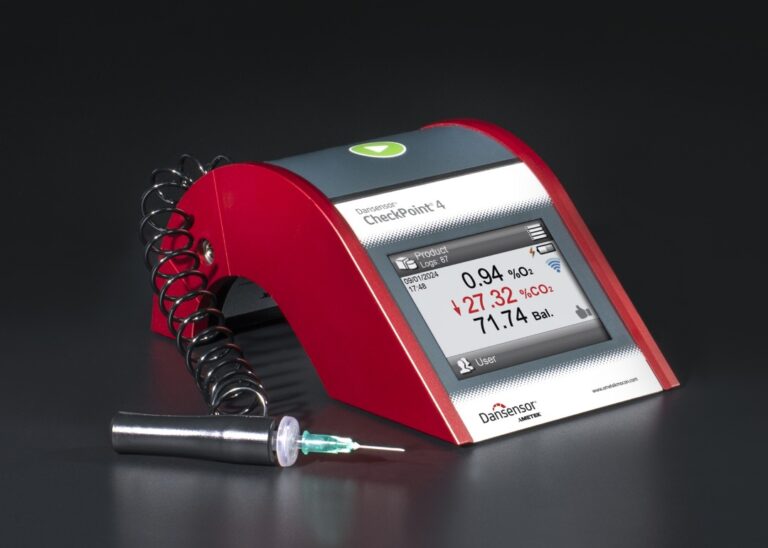
✅ Dansensor CheckPoint 4
- A handheld, battery-powered gas analyzer for O₂ and optional CO₂ measurements
- Extremely portable — ideal for walking between packaging lines or multiple production zones
- Fast sampling time and intuitive touchscreen interface
- Rechargeable Li-ion battery lasts for up to 8 hours of continuous operation
- Data logging and wireless transfer via Bluetooth® and USB
- Ideal for environments requiring flexibility, such as when testing multiple packaging lines or locations
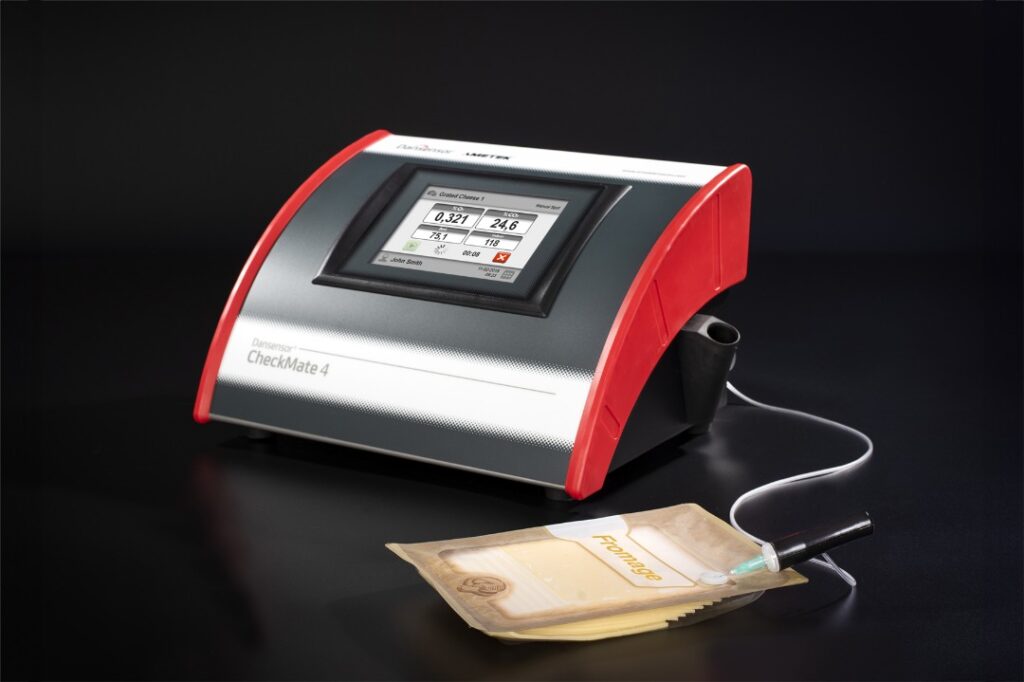
✅ Dansensor CheckMate 4 (Optional for fixed at-line setup)
- Benchtop version with higher throughput for batch testing
- Suitable for higher volume at-line sampling if mobility is less critical
Use Case:
A ready-to-eat meal manufacturer assigns QA personnel to perform random headspace tests at the end of each packaging line using the CheckPoint 4, ensuring O₂ levels are within spec before the trays are sealed and palletized.
Off-line Gas Analysis
What it means:
Testing conducted in a separate quality control (QC) lab, often away from the production area. Typically used for detailed reporting, product development, or compliance audits.
Key Benefits:
- Higher accuracy
- Supports documentation and traceability
- Best suited for non-routine checks, audits, or R&D
Recommended Models:
✅ Dansensor CheckMate 4
- Suitable for detailed lab analysis, trending, and archiving
- Can be configured with audit trails and batch tracking for compliance (e.g. 21 CFR Part 11)
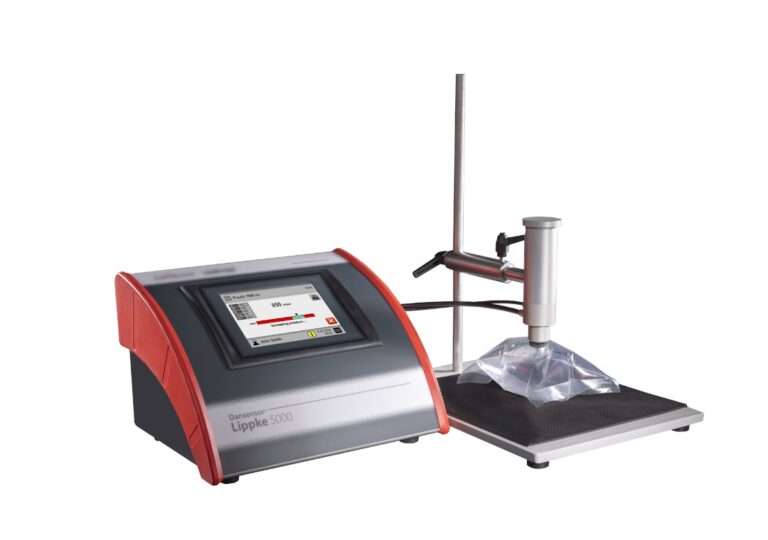
✅ MOCON Lippke 5000 (for seal integrity testing, often paired with off-line gas testing)
- Performs burst, creep, and leak tests in the lab, complementing gas analysis with mechanical packaging validation.
Use Case:
A food manufacturer collects random samples from three shifts daily and tests them in a QA lab for O₂ levels, CO₂ stability, and seal integrity before releasing them to market.